
Products Compliance
Labels:
When reading labels, whether it’s for edibles, cartridges, or any other product in between, it’s really important to know what kind of information will be on the labels and what to do if a product comes labeled incorrectly (or not labeled at all).
Every label will tell you some basic information about that product. It will HAVE to tell you the strain name, product weight, percentage, where and when it was tested, what date it was harvested and tested, as well as activation time. Though it’s not required, it is definitely appreciated when companies also include top terpenes and other cannabinoids.
THC and CBD Percentage: Tells you the total of ALL the cannabinoids and terpenes in the product. Sometimes it’s written as: Total Cannabinoids: %
And other times it’s shown as a THCA %.
THCA is the acidic, non-psychoactive form of THC found in raw, unheated cannabis, while THC is the psychoactive form of the compound that results from heating or aging cannabis. THC is responsible for the characteristic “high” associated with marijuana use, while THCA does NOT have psychoactive effects.
→ Will someone ever request lower terpenes? Well, they will, but what they generally are asking for is something that is more like that “old school” flavor and smell. These people wouldn’t want something that smells like candy or lemons; they are typically looking for a “classic” smell.
* Although it’s super appreciated, when these numbers are included, it is NOT required to be on the label. Just the THC%, Strain Info, and Testing Info.
Terpene Percentage*: Tells you the percentage of terpenes that are in the product. The higher the percentage of terpenes, the more flavorful your flower or concentrate will be.
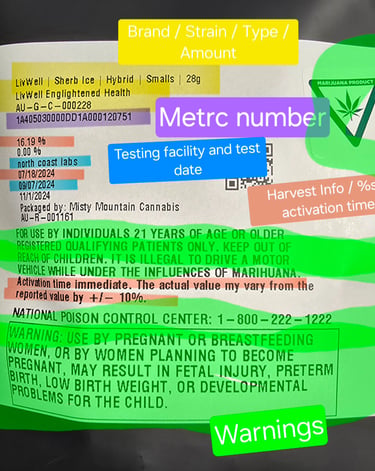
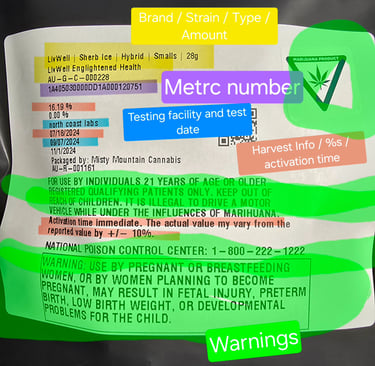
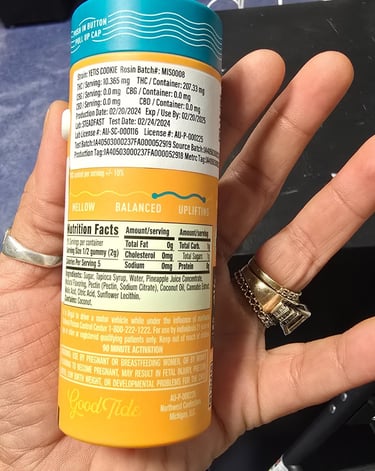
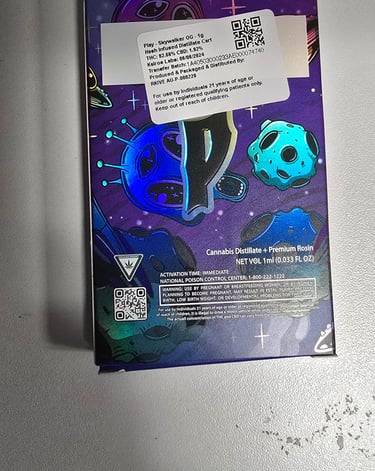
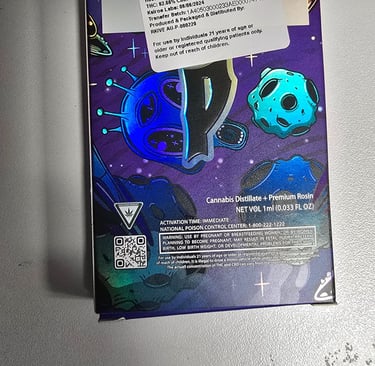
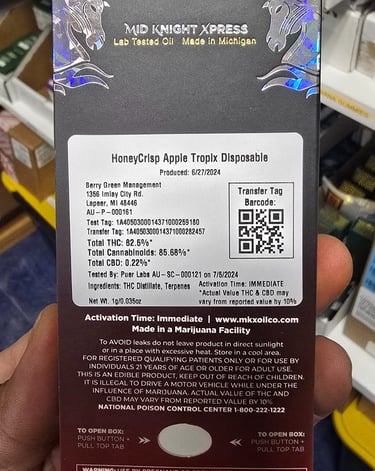
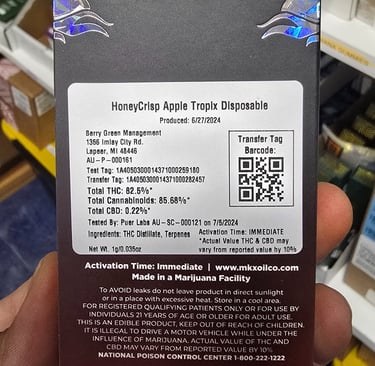
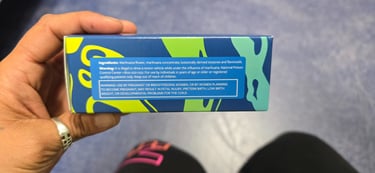
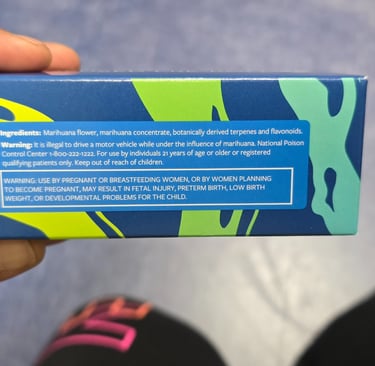
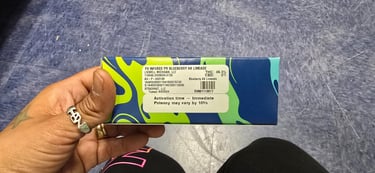
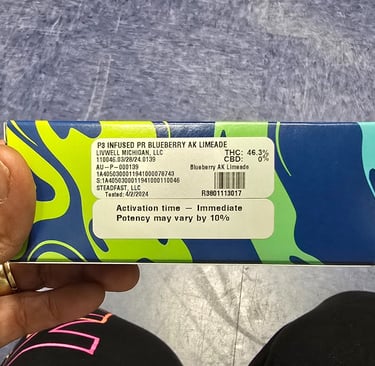
Flower label
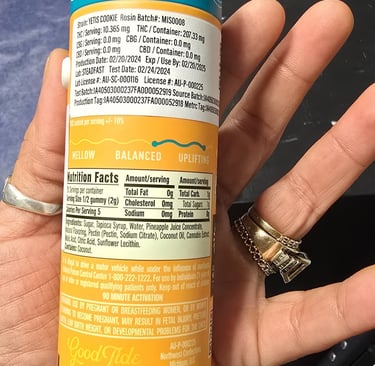
Edible label
510 thread cart label
Disposable cart label
infused pre roll label
Warning Label:
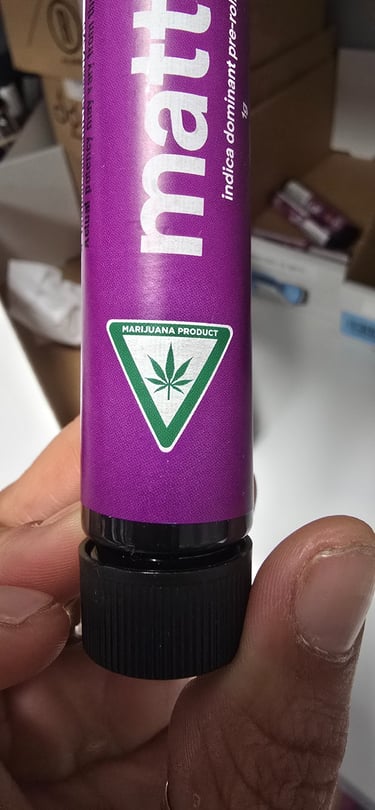
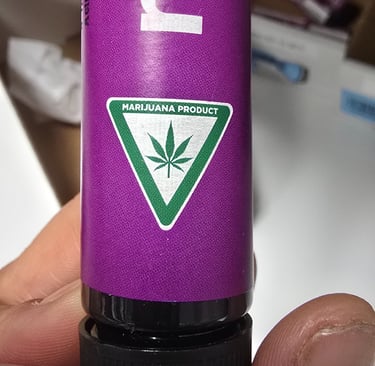
Besides the Compliance information, it is also important to note that all products that contain THC also must include a Green Warning Label. This warning ensures that people know it contains THC.
Pregnancy Warning Box:
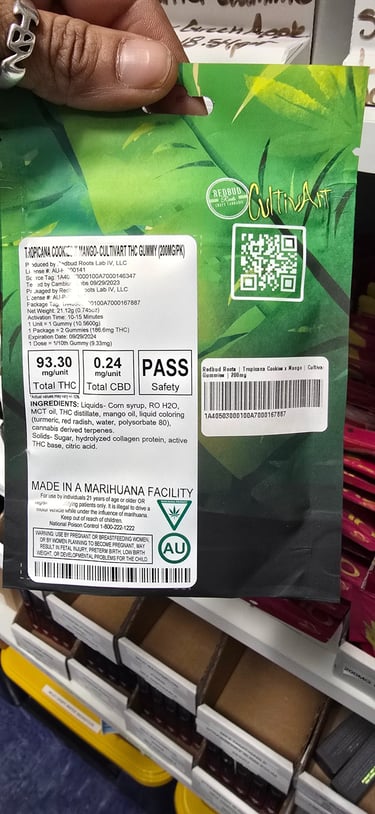
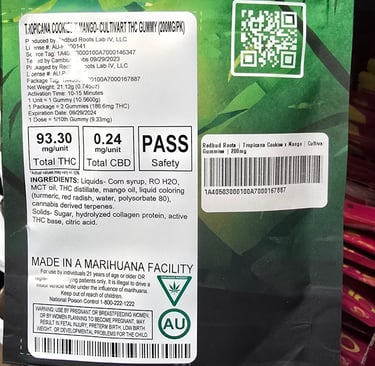
Pregnancy warning and information relating to consuming while pregnant and the birth defects warning should be clearly printed with a thick box surrounding the information.
So what do you do if you don’t see a compliance label on a product?
STOP!
Stop the sale. Do NOT sell it!
Tell a manager or Lead
Offer a new product - whether that’s the same product that has the correct tag, or offering a comparable alternative
Prepare a tag with the info - What product, METRC number it was from, and leave it in the Discrepancies box in the vault for Rob or Ash to take care of.
We should NEVER, for ANY REASON, be selling products that do not have the proper compliance tags on them. We already know that we need to stay compliant for ourselves, the business, and our customers. Once we know what we are looking for, and what info needs to be on it, we will be able to quickly and accurately tell if it is compliant or not. Let’s keep our eyes peeled, there is a lot of room for human error in all of this, so let’s make sure we are doing our due diligence to stay compliant.
Limits:
According to the State of Michigan, an adult aged 21 and older may have up to 10 ounces in their home at a time that is under lock and key. Their transactional limit varies, depending on the product they are buying.
Stickering:
While stickering products, we have to make sure we are not covering any information. ANY warnings, symbols, or cautions cannot be covered. Do not cover any dosing information, nutrition facts, etc. as it is important for the customer to know all the warnings, dosing directions, ingredients, etc. If you HAVE to cover something, cover the brand logo or social media logos/info so people can still read the proper information.
Consumption:
No on-site consumption of THC products is allowed for any reason by staff or customers. The easiest way to explain this to people is that they are not allowed to show up and consume alcohol in the parking lot of a bar, you cannot go outside of a dispensary to smoke your cannabis. No exceptions, no excuses.
Classifications:
Although it’s not entirely accurate anymore, the three main classifications in cannabis are in reference to how they make you feel:
Sativa: more uplifted, silly, talkative, wanting to get things done, focus
Hybrid: more balanced, a blend between sativa and indica
Indica: more relaxed, “in da couch,” great for pain, anxiety, and relaxation
Although it’s super tempting to refer to all cannabis products as either sativa, hybrid, or indica, it really isn't an accurate measure these days. Sativas and Indicas are determined by a multitude of reasons, including top terpenes, the actual structure of the plant, and how it was grown. Sativas actually go a lot longer than a hybrid or indica, so that’s why we say most cannabis, especially in a dispensary setting, are going to be mainly hybrids because they are not going to pull early for more indica effects, or go super late for sativa effects. They are generally on a time-specific schedule and growing for the masses does not allow them to give each plant the individualized time and care they might need.
It’s also important to note WHO grew the plant too.
For example, a company sells the strain “Pink Cookies.” Pink Cookies is Girl Scout Cookies x Cherry Pie. Why does that cross look familiar? Because it’s better known as Wedding Cake. Wedding Cake is also Girl Scout Cookies x Cherry Pie. Why did they name it Pink Cookies then?? Well, there’s a million reasons and that’s a whole other topic in itself. 🙂
So, remember to look for proper compliance tags and STOP if they do not have one, be mindful of using the terms “sativa” and “indica,” and stay compliant in our actions.
Subscribe For Updates!
Quick Contact
GreenWCannabis@AndNightUpLate.com
231-442-9199
Muskegon, MI 49442